
Transforming Liddell from coal to battery
One of Australia's largest battery storage projects, delivering fast-response capacity to support grid reliability as part of the clean energy transition.
CASE STUDY - MARCH 2026

CLIENT | LOCATION | SERVICE | PROJECT STATUS |
AGL | Hunter Valley, NSW | Substation | Completed |
Overview
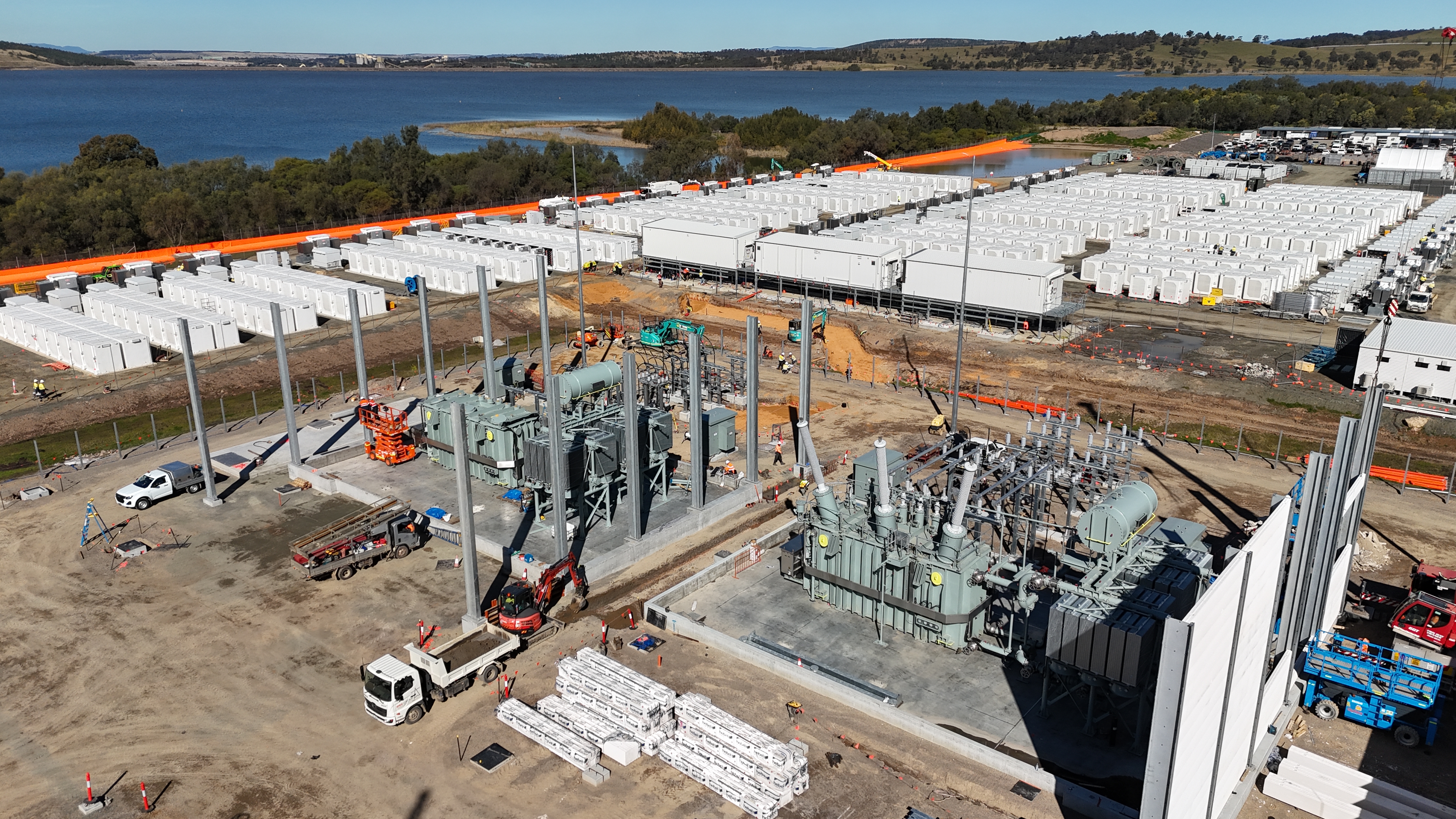
AGL Energy’s Liddell Battery Energy Storage System (BESS) is a flagship project within the company’s Climate Transition Action Plan, supporting its ambition to deliver six gigawatts of renewable and firming capacity by 2030. Located on the site of the former Liddell coalfired power station in New South Wales, the project represents a significant transition from legacy thermal generation to modern, grid-scale battery infrastructure.
For AGL, the project carries both strategic and symbolic importance as it transforms a retired coal asset into critical infrastructure supporting the energy transition.
The project at AGL was led by Chirag Kakadiya, Senior Project Manager, Energy Assets -Construction, and Hamid Shilani, Portfolio Director, Construction - Battery, who oversaw delivery of the overall BESS works and have reflected on the project’s challenges, outcomes and the experience of working with Lumea.
Liddell BESS has been constructed within the footprint of the former power station, leveraging existing infrastructure while navigating the constraints of a decade sold industrial site. Lumea was engaged as a delivery partner to support the connection works and associated network infrastructure, working closely with AGL, Transgrid and multiple contractors to enable timely energisation.
A critical achievement of the project was the delivery of the substation required for the connection in approximately 10 months despite challenging on-ground and supplier issues, significantly faster than the typical 12-month timeframe for comparable assets, while maintaining high standards of construction quality.
Key Challenges
The project team needed to overcome several key challenges to deliver the Liddell BESS connection on time and to the required standard:
01
Uncertain ground and geotechnical conditions
The project was delivered on the site of a former coal-fired power station built more than 50 years ago the ground conditions were not fully known at the outset. Elevated groundwater levels and unsuitable material required redesign of foundations and careful material management within a constrained footprint.
02
Site and environmental constraints
Strict planning and environmental requirements limited how excavated material could be handled and stored, adding complexity to construction sequencing within a defined project boundary..
03
Equipment issues with potential schedule impact
A failure identified during acceptance testing of a key transformer posed a risk of delaying substation delivery by several months if not resolved quickly and collaboratively.
04
Accelerated delivery timeframe and coordination complexity
The project was delivered under a compressed schedule, requiring close coordination across multiple contractors, suppliers and stakeholders operating in parallel within a limited site footprint.
"This is one of the largest battery projects in our portfolio. It's a key step in building out our renewables and firming capability as we transition away from retired coal assets."
Solutions

Partnership-led delivery under an accelerated schedule
From the outset, Lumea worked closely with AGL to maintain momentum under a highly compressed delivery program, ensuring progress continued even when challenges emerged. Rather than allowing contractual or commercial discussions to delay works, the teams focused on shared outcomes and keeping the project moving.
“They always informed us of potential variations or schedule impacts, but at the same time, they didn’t stop the work. That showed a genuine commitment to delivering the project within the timeline and acting in the customer’s interest,” said Mr. Kakadiya.

Proactive problem-solving and supplier coordination
When technical and equipmentrelated issues arose, including transformer failures that posed a risk to the delivery schedule, Lumea played a central role in coordinating solutions and mitigating impacts.
“That was probably one of the biggest challenges. It had the potential to push the substation delivery out by a couple of months if it wasn’t handled properly,” said Mr. Kakadiya.
By drawing on established supplier relationships and reallocating resources quickly, Lumea helped the project team recover time and maintain alignment with key milestones. This proactive approach reduced delivery risk and avoided escalation of issues late in the program.

Clear communication and a ‘best for project’ mindset
Strong communication across all levels of the project was a defining factor in the success of the Liddell BESS connection. Regular site-level coordination, structured meetings and senior leadership engagement ensured risks were identified early and addressed collaboratively.
Crucially, both organisations adopted a shared “best for project” mindset.